![How to Grow Ginger [Step by Step Guide]](https://farmingpedia.com/wp-content/uploads/2020/11/root-1927138_640-min.jpg)
Ginger farming is a crop which is very profitable. Ginger (Zingiber Officinale) is a significant commercial crop which belongs to Zingiberaceae family. Ginger farming is extensively done owing to the high value and its use in wide purposes such as medicine, confectionary, and food additives.
It is an indigenous plant which is used as a stimulant and carminative medicine for treating gastro-intestinal tract concern. Ginger consists of 6.5% Oleoresin that is commercially known as ‘Gingirene’ obtained from ground ginger by solvent extraction process.
Ginger is an herbaceous perennial consisting of underground rhizomes (also known as creeping rootstalk) comprising of leafy shoots of 0.5-0.75 m height. Thus, the propagation of the crop occurs through aromatic rhizomes. The leaves of the ginger plant are narrow and dark green in color. The flowers are speckled, small yellowish in color. The plant finds its use both as a spice and a medicine. At the commercial level, ginger is used as a dried rhizome.
Ginger is marketed in various forms such as ginger candy, ginger beer, dry ginger, ginger ale, raw ginger, ginger wine, ginger flakes, ginger oil, ginger oleoresin, bleached dry ginger, ginger powder, and many other varieties.
Dry ginger as well as fresh ginger is used in preparing various dishes due to its flavor, aroma, and pungent taste around the world, especially in Asia. The major producers of ginger in the world are India, China, Nepal, Thailand, Nigeria, Indonesia, Bangladesh, and the Philippines.
Uses of Ginger
Oleoresin and essential oil obtained from ginger is used in the manufacture of perfumes and flavouring essences. Ginger also finds its use in the production of pharmaceutical preparations, ginger beer, cordials, ginger wine, and pickles.
A dietary intake of 5g of ginger can help to avoid coronary artery disease that occurs due to the consumption of fatty food items. The fibrinolytic activity is enhanced with the consumption of ginger that helps in preventing CAD (Coronary artery disease). Medicines and soft drinks can also be prepared from ginger.
How long does ginger take to grow?
This step is crucial in ginger farming. The growth rate differs from crop to crop. For a ginger crop to reach adulthood, it takes approximately 8-10 months. Thus, it takes around 8-10 months of time to grow into a complete adult plant. Conversely, if ginger is required for the vegetable purpose it can be collected after 6 months. The best method to understand that ginger is fully grown is to monitor the leaves. When the leaves start turning yellowish indicates the complete growth of the yield.
Ginger Farming Techniques
Various ginger farming techniques are implemented at commercial and non-commercial levels. The ginger planting techniques are majorly divided into two methods – Direct method and Indirect method. Direct method of planting includes the Broad ridge system, and Flat-bed system. Transplanting is the indirect method used for ginger farming.
- Broad Ridge System
This system is followed in soils which are medium to heavy. The beds are raised at a height of 20-30 cm. The beds are 75-100 cm broad at the tops. Depending on the slope of the land, the length of the bed varies from 6-10 m. The sets are planted 10 cm deep and 30 cm apart from each other. At a particular spot, only one set is plant and then covered by the soil. After planting the crop, light irrigation is immediately given. The yield is 50% more as compared to the flat bed system.
- Flat Bed System
When the soil is light, flat bed method is used. The beds are of 4×4 m size. The sets are placed 20-30 cm away from each other and are 10 cm deep. Only one set per hill is planted and covered by soil. After planting, immediate light irrigation is given.
- Transplanting Method
In order to produce a good variety of seedlings, the transplanting method is used as a standardized method. The technique uses single bud sprouts which are around 4-6 g in weight. The method has many advantages such as the reduction of seed rhizome quantity, reduced cost on seeds, and production of disease-free planting materials.
Also Read: Cabbage Farming Guide
How to Plant Ginger?
Usually, ginger is grown from rhizomes, seeds or by tissue culture method. Out of all these, tissue culture is the best and productive way of growing ginger.
In order to select the dormant rhizome, collect the fresh and healthy ginger. If the skin is not thick on the outside, ensure to keep them in direct sunlight for around 3-7 days. The skin of the ginger should be yellow-brownish in color.
Planting ginger is easy and beneficial by cutting into small parts. Cutting the rhizome is an easy method. The ginger plant considers rhizome as its own root and starts to grow new roots from it. The dormant rhizome is cut around 2-3 weeks before planting which is similar to potatoes.
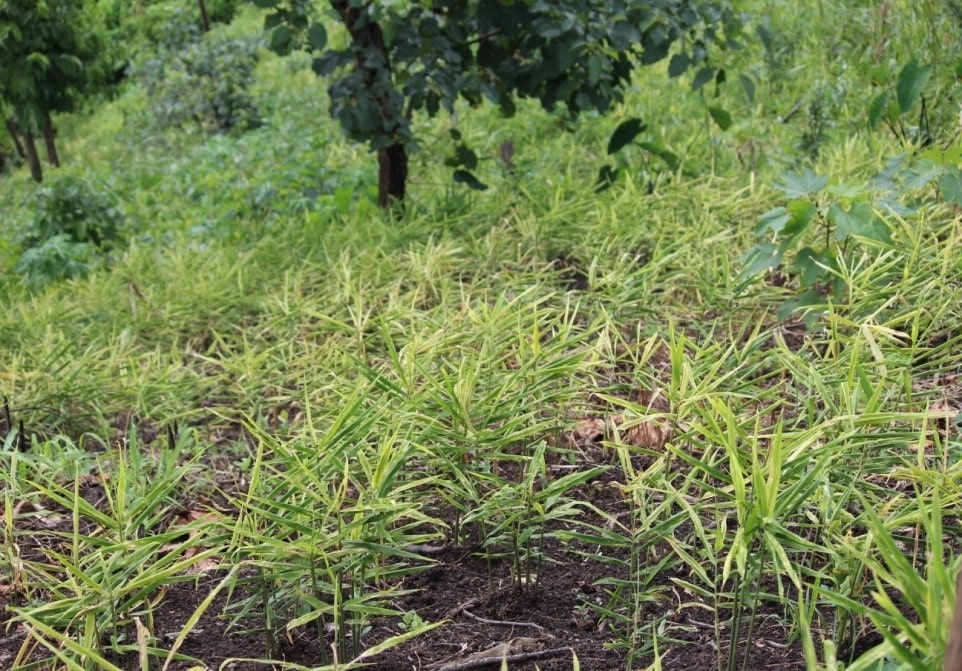
The part should contain at least one eye when it’s cut off and should weigh around 4-6 g. The cutting size can be from 1-3 inches and it solely depends on the preference. The rhizome that is bigger in size produces large food. This method causes the destruction of the rhizome and thus it is recommended to cut the rhizome.
Once the best rhizome is selected, keep them aside for some days to allow the split surface region to grow and recover a callus. It is essential to be patient while growing ginger as it grows gradually and predominantly outside. The sprout however might start to grow in several days.
During this phase, it is essential to water regularly or at least for 2 weeks. A movable tray bed is advisable and avoid placing the bed directly under the sun. This stage of the plant requires approximately 3-4 hours of sunlight during morning and evening time. An acre of land requires 600-800 kg of ginger seeds for sowing.
Ginger Cultivation Season
The ideal season for transplanting ginger roots is in early spring in North America and the USA. Spring and summer season is good for Africa and other subcontinent countries that depend on natural rainfall. The crop should be planted 2-3 weeks before the rainy season. Although it should be noted that heavy rainfall is harmful to the ginger plants.
Climate Required for Ginger Growth
Ginger can grow in areas where there the weather is sunny with moderate rain. The climate necessary for ginger growth is a dry environment with moderate rain and sunlight. However, direct sun is harmful to the plant. A sheltered place is ideal where it can receive 2-5 hours of sunlight. Additionally, the manual watering or water from rain is required at regular intervals.
Soil Preparation for Ginger
Ginger roots grows best in moist, rich, well-drained, and loose loamy soil worldwide. The loaming soil restricts the waterlogging in the roots as it drains the excess water. Ginger roots are fond of acidic soils in a pH range of 5.5-6.5. The ginger rhizome can be grown at both rain-fed and irrigated conditions.
Varieties of Ginger
Different kind of varieties are grown in India. The important varieties are Varada, Wynad Local, Maran, Himachal, Kuruppampadi, Suravi, Mahima, Suprabha, Suruchi, Rajasthan, Assam, and Himgiri among others. Rio-De-Janeiro and China are the varieties that are imported.
Intercropping in Ginger Production
Ginger is a shade-loving crop and thus needs high moisture content in the environment for the normal growth. Ginger can be intercropped with other plants such as tree castor, banana, cluster beans, and pigeon-pea. At higher altitudes, it can be intercropped with chilli and tomato. Ginger can be mixed with orange, coconut, and coffee plantations.
Irrigation
During the crop period, ginger requires 1300-1500 mm of water. The significant steps for irrigation are rhizome development stages, germination, and rhizome initiation. Immediately after planting, the first irrigation is provided and consequent irrigation are done between 7-10 days. Drip system and sprinklers are used to enhance the yield by increasing the water efficiency.
Weeding
To handle the problem of weed, 2-4 hand weeding is always advisable depending on the growth stage of the crop. The weeding process is followed by the earthling process that helps to cover the rhizome.
Earthling-up
Earthling up is essential for the growing process of ginger. The soil is drawn around the plant with the help of spade. This process breaks the fibrous roots which ultimately supports the growth for better development of rhizome. The process further enhances the yield.
Mulching
In order to handle the post-sowing water stress, beds are covered using straws, plant residues, and dry leaves. Usually, farmers cover the beds using twigs and green leaves of Chillaune (Schimawallichii) but it varies as per the conditions.
The type of mulch differs from 5-20 tonnes/ha in dry form. The mulching process provides heat as well as moisture to the beds, protects young germinated plants from storms and heavy rains, reduces soil erosion, and increases germination. The post-decomposition stage transforms this mulch into a nutrition source for the soil and thus fulfilling the plant’s need.
Harvesting of Ginger
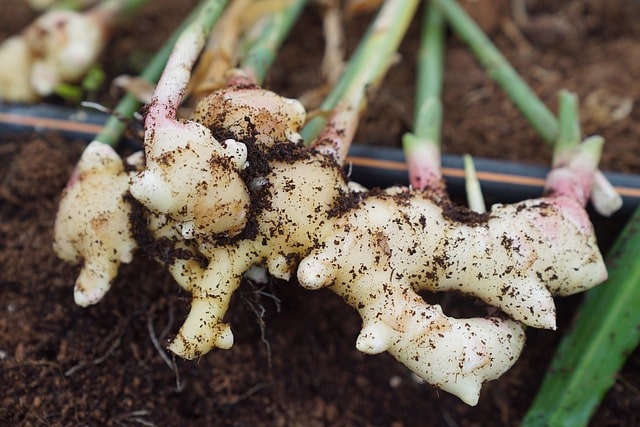
The harvesting of ginger can be done when the leaves start to dry and turn yellow in color. It takes around 8-10 months for harvesting but it also depends on the planting time. The irrigation should be halted one month before the harvest. The lifting of the rhizomes can be done by digging with a spade.
The ginger harvested for 5-6 months can be utilised for preparing pickles, alcoholic beverages, candy, ginger preserve, soft drinks, and for vegetable purpose. The crop harvested during 7-8 months can be dried and used for the preparation of oleoresin, bleached ginger, dehydrated ginger, and ginger oil.
Fertilization
The plants need to be fertilized for 6-8 weeks. Organic fertilizers such as fish emulsion or seaweed extract can be used. The nutrition required for the growth of the ginger are –Potassium, Phosphorus, and Nitrogen.
Potassium is essential for transpiration, osmosis, opening and closing of stomas of leaves, and yeast activation.
Phosphorus is necessary for respiration in plants as well as for nucleic acids, enzymes, and phospholipids evolution. It also aids in stimulating fresh root extension.
Nitrogen is necessary for amino acids, chlorophyll, and proteins. It is vital in comprehensive portions.
Tips to Grow Ginger Faster
Following are some tips to practice while doing farming techniques:
- Monitor the health and ginger root growth after 2-3 months
- The pH of the soil should be maintained in the range of 6.1-6.5
- Ensure to provide proper fertilizer to the ginger plant
- Soil should be loose and well-drained for the rapid growth of ginger roots
Ginger Cultivation Profit per Acre
The net profit from 1 acre of ginger cultivation is approximately 3,31,162/ acre. However, this may vary depending on the market conditions.
Recommendation for Better Production
- Prevent waterlogging in the ginger crop field
- Try to keep the field weed-free
- Crop rotation should be followed at least 3-4 years
- Use disease-free rhizomes for sowing
- Always try to avoid removing mother rhizome as it increases disease intensity
Control and Detection of Pests
Mites, slugs, nematodes, snails, and leafminers are the ones that harm ginger. The early stage is mainly prone to mite infestation. Insecticidal soap showers can be useful against mites. Slugs and snails mainly eat the fresh and adult leaves. To shield the leaves from these snails and slugs, farmers need to mulch the sand properly. The bulb tubers are affected by on-segmented roundworms that might cause bacterial or fungal infection. The pests can be controlled by keeping the plant clean.
Storing Process of Ginger
Ginger can be stored in dried as well as fresh state. The fresh and cleaned ginger can be stored in cold climate with a temperature in between 10-15°C. The storage of dried ginger involves following steps:
- The ginger should be cleaned using fresh water
- Cleaned ginger is then dried in the sun. The ginger can be cut into pieces to dry them faster
- The dried ginger can be stored in the same form or can be powdered
- The product obtained can be stored in a tin, glass or paper bags
Conclusion
Cultivating ginger in the same land might result in a low yield of the crop. The one-year break is mandatory after farming for 2-3 years. Organic compost can also prove useful in this condition.